


MD: Discover why reading is one of the most important and productive habits for students and how it benefits their minds and personalities.
Introduction: Why Reading Still Matters in the Digital Age
With the outburst of technology in our lives, with AI, smart classrooms, and the use of laptops in classrooms, the impression of reading books has gone down in the minds of students.
Children nowadays are more drawn to screens. This has affected their learning abilities and retention. The role of reading books is not just to provide information; it is to improve knowledge, imagination, and personal growth.
In this blog, we will discuss why reading books remains important in the era of technology and the key benefits it provides to students of this generation.
What Makes Reading an Essential Learning Habit?
Reading is not just a habit that helps students improve academically; it also helps them use their intellect more, improves vocabulary and comprehension, and builds the foundation for lifelong learning.
As students read regularly, they learn to analyze information, connect ideas, and think independently. Reading also sparks curiosity, encouraging children to ask questions, seek answers, and develop a deeper understanding of the world around them.
By making reading a daily habit, students develop skills that benefit them throughout their academic journey and beyond, making reading one of the most valuable habits they can build from an early age.
Key Benefits of Reading for Students
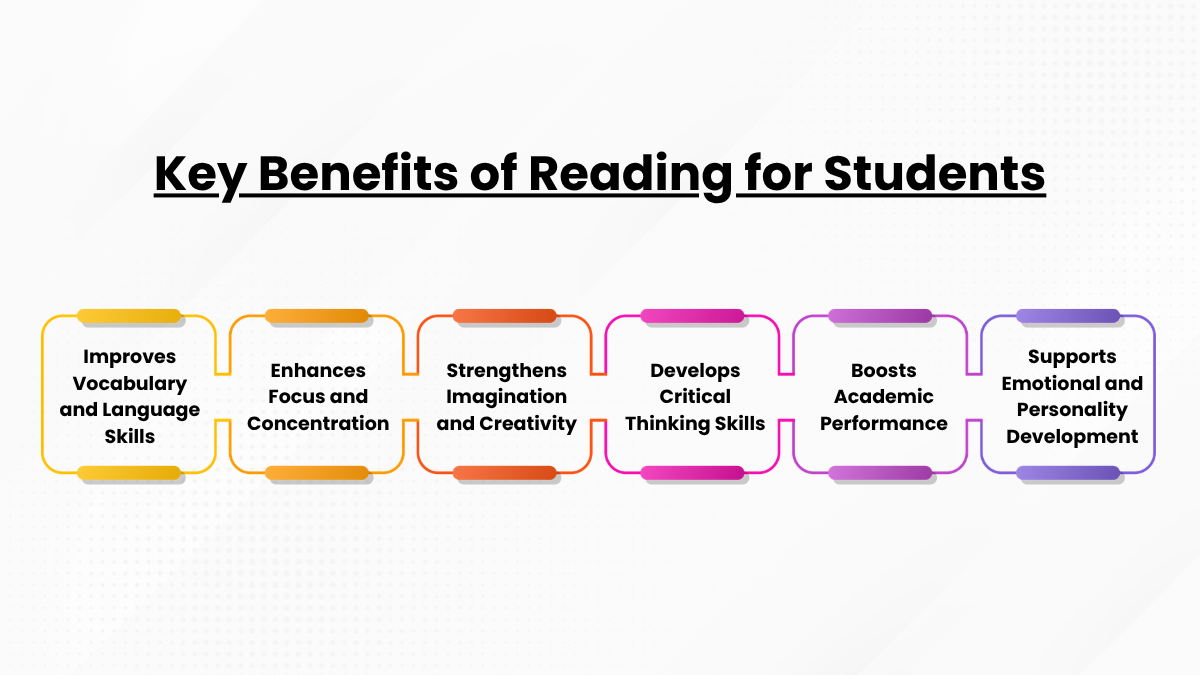
Here are some benefits of reading for students:
1. Improves Vocabulary and Language Skills
Reading daily helps students learn new words, phrases, and sentence structures, improving their vocabulary. Reading also improves communication skills.
2. Enhances Focus and Concentration
Reading a book requires diligent attention during that period, helping improve focus and concentration in students. This trains their minds to concentrate and pay attention while performing a task or during a learning session.
3. Strengthens Imagination and Creativity
>While reading a book, students start to visualize characters, places, and situations, stimulating their imagination. Reading different types of fiction helps them create their own characters and an imaginary world, improving their creativity.
4. Develops Critical Thinking Skills
Reading books from different genres helps students study and understand individual perspectives of various characters, encouraging them to discover distinct views, analyse information and draw logical conclusions.
5. Boosts Academic Performance
Students who develop regular reading habits often have better comprehension skills, attention span, and a deeper understanding of concepts. This makes learning easier and contributes to improved performance in assignments, classroom activities, and examinations.
6. Supports Emotional and Personality Development
Reading different books also polishes a student’s personality, which is why reading stories, biographies, and inspirational books is better for building strong character. Books also allow them to experience and learn about emotions such as empathy, happiness, distress, etc.
Common Challenges That Prevent Students from Reading
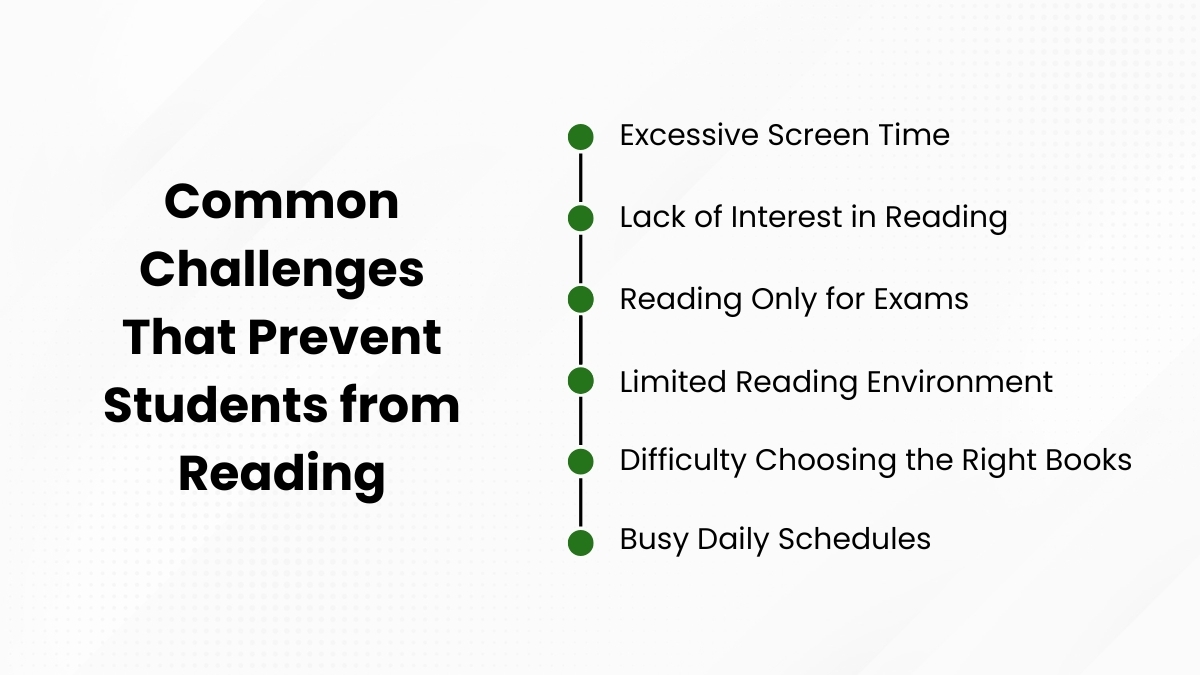
But if reading has that many benefits, why are students not reading books daily? Here are some common reasons that keep students from reading.
1. Excessive Screen Time
The excessive use of the internet, smartphones, tablets, and social media has taken time away from students that could otherwise be spent reading books. It is also reducing their retention rates because of short videos.
2. Lack of Interest in Reading
Many students think that reading is just a part of their academic life, which does not interest them much. This is an issue of non-exposure and happens when students have never had the opportunity to read interesting or fictional books.
3. Reading Only for Exams
>Many students read only to prepare for tests and examinations. This limits their exposure to books that can improve creativity, critical thinking, and general knowledge beyond the classroom.
4. Limited Reading Environment
When students are not encouraged to read at home or are not given library sessions at school, they are less likely to develop the habit naturally. A lack of access to books and reading opportunities can also reduce their interest in reading.
5. Difficulty Choosing the Right Books
When choosing their first book, students get confused about selecting one that matches their age, interests, or reading level, and often choose the wrong one that feels difficult to understand or uninteresting.
6. Busy Daily Schedules
Between school, tuition classes, extracurricular activities, and homework, many students struggle to find dedicated time for reading. Without a planned routine, reading often becomes a lower priority despite its long-term benefits.
How Parents and Teachers Can Encourage Reading Habits
Giving 20 to 30 minutes daily to reading can help students build consistency and gradually turn reading into a healthy habit. Parents and teachers should also allow children to choose books based on their interests, making the experience more enjoyable and engaging.
Creating a reading-friendly environment at home and school is equally important. Organizing activities such as storytelling sessions, book discussions, or reading challenges can motivate students to read more frequently.
Parents and teachers can set an example by reading daily. Watching adults around them read daily piques students’ interest in trying to read books.
Conclusion: Importance of Reading for Students
In a world full of technology, reading even 30 minutes a day can help a student establish focus, improve creativity, develop critical thinking, strengthen personality, improve vocabulary and boost academic performance.
Developing a reading habit begins with small, consistent efforts. With the support of parents and teachers, students can discover the joy of reading and make it a lifelong habit that benefits them both inside and outside the classroom.
At Vivekanand Assandh, we believe that strong readers become confident learners and responsible individuals. By encouraging a culture of reading through engaging learning experiences and holistic education, we help students build the skills they need for lifelong success.
Contact Vivekanand Assandh today to learn how we inspire children to develop meaningful reading habits and a lifelong love for learning.
FAQs: Importance of Reading in Students’ Lives
1. What are the 6 benefits of reading for students?
Ans: Here are 6 benefits of reading for students:
- Improves vocabulary and language skills - Enhances focus and concentration - Strengthens imagination and creativity - Boosts academic performance - Develops critical thinking skills - Supports emotional and personality development
2. Why is reading important for students?
Ans: Reading is not just a habit that helps students improve academically, but it also helps them use more of their brainpower. Reading encourages knowledge retention, improves vocabulary and comprehension skills, and builds the foundation for lifelong learning.
Get more information
