


Introduction to Importance of Life Skills for Students
As the world is advancing, the problems brought by rapidly evolving technology, globalization, and ongoing health issues are also arising. And to fight these problems, it is important to teach students life skills.
Schools in 2026 are only focusing on academics, which is not enough to make a child’s future bright. Life skills are invaluable assets that can help young adults navigate the challenges of daily living; schools need to teach life skills such as decision-making, managing emotions, and problem-solving that will prepare them to enter the real world and live independently.
In this blog, we will talk about the importance of life skills for students and why schools should teach these skills at a young age.
What Are Life Skills for Students?
Life skills for students are the skills that are useful to students, other than academics. Some of these skills include critical thinking, problem-solving, communication, decision-making, self-awareness, empathy, resilience, time management, and financial literacy, preparing them for personal growth and future responsibilities.
These life skills help students navigate daily challenges, manage emotions, build relationships, and succeed in life. Learning some or all of these skills can help a student advance in their life.
It’s important to teach these types of life skills to students from an earlier age so that they can learn and practice them better. These skills also help them develop a sense of independence.
Why Teaching Life Skills at a Young Age Is Important
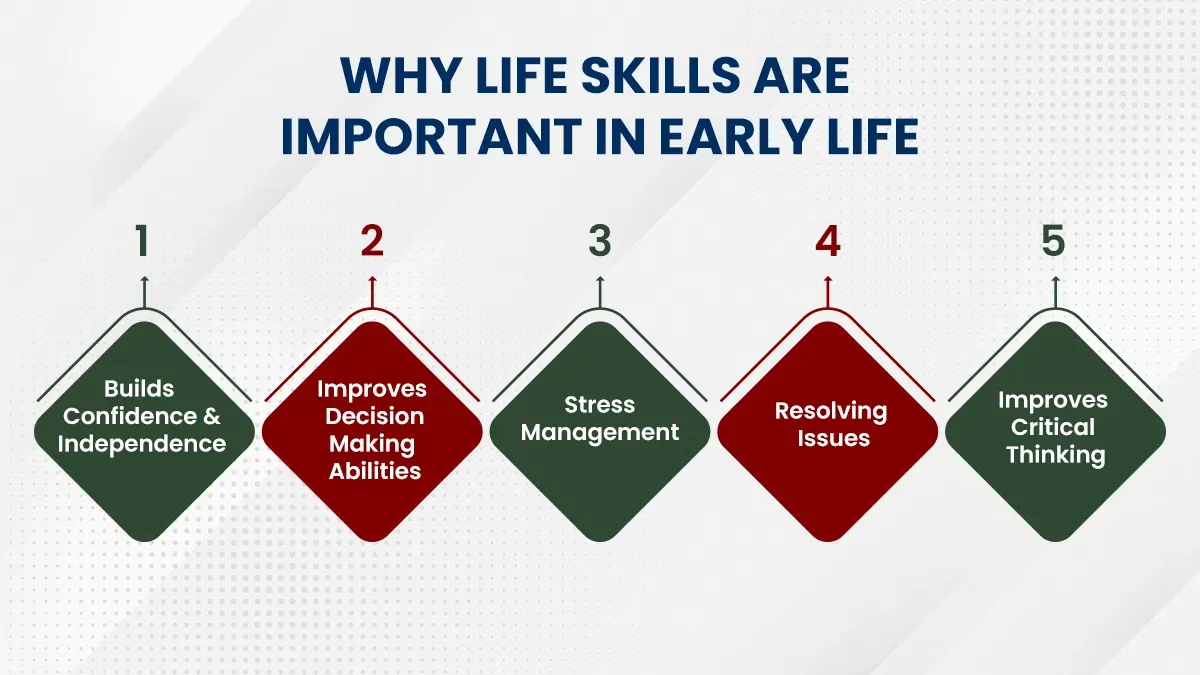
Learning life skills helps young people understand who they are and what they want out of life. Here are some reasons why teaching life skills at a young age is important:
1. Builds Confidence and Independence
- Life skills like public speaking, leadership, and teamwork help young people build confidence and become more independent.
- This confidence boost for students at a young age can help them become great leaders in the future.
2. Improves Decision-Making Abilities
- Decision-making includes students seeking and understanding the perspectives of others and often questioning their own beliefs so that they can make well-informed decisions.
- Decision-making for short-term and long-term plans is important as it affects every future aspect of our life.
3. Stress-Management
- Students get stressed in school at the time of exams or surprise tests; Stress management skills are important as they help you navigate these difficult situations, improving your mental health.
- From health concerns and financial pressures to relationship troubles and family conflicts, learning to effectively control stress can provide relief in difficult circumstances and help overcome difficulties more easily.
4. Resolving Issues
- Dealing with difficult times while managing stress and anxiety is an important life skill to learn for students who are ambitious to grow and take up jobs at big corporations, which are responsible for bigger things around the globe.
5. Improves Critical Thinking
- Critical thinking is an important life skill that helps students face issues head-on and find innovative solutions.
- Skills like critical thinking can be developed through brain training exercises, such as meditation, puzzles, and games like chess and escape rooms.
Key Life Skills Every Student Should Learn in School
Schools are the next home for students, as they spend 50% of their time in school, which is why schools need to teach life skills to students. Here are some life skills that schools should teach to students:
1. Communication and Listening Skills
- Teachers can teach communication skills by organizing different activities in the classrooms, such as drama, debates, and group projects. These skills help children create new bonds with each other while improving their communication and listening skills.
- Communication skill is an important asset in life as they help you convey your message, views, and opinions onto something more effectively.
2. Emotional Intelligence and Empathy
- Emotional skills such as empathy help students create connections with others and feel their feelings and emotions. Emotional intelligence teaches students how to cope with stress, disappointment, and other challenging emotions.
- Mastering emotional regulation leads to a better understanding of oneself and others.
3. Time Management and Self-Discipline
- Time management skills lead students to their full potential by increasing their efficiency and discipline. These time management skills later come in handy when students get employed.
4. Teamwork and Leadership
- Teamwork skills taught in schools help in the future, while working in a company with a team, these skills include public speaking, managing a team, and building relationships.
5. Financial and Digital Literacy
- Financial and digital skills such as budgeting, saving, coding, and email writing should be taught at a young age in schools to help students in the future.
Role of Teachers in Life Skill Development
The role of teachers in life skill development is to guide students beyond academics. As students see teachers as role models, teachers influence how students think, communicate, and respond to real-life situations. With continuous guidance, students develop essential life skills such as critical thinking, problem-solving, communication, decision-making, and emotional intelligence.
Teachers can promote life skills by encouraging open debates, group presentations, and project-based learning. These methods help students learn teamwork, leadership, adaptability, and confidence. By creating a positive and supportive learning environment, teachers motivate students to express their ideas, respect others’ opinions, and develop strong interpersonal skills.
By mixing life skills with daily academics, teachers prepare students not only for academic success but also for lifelong personal and professional growth.
Role of Parents in Supporting Life Skills at Home
Parents play an important role in teaching life skills, as the home environment is where children practice what they learn at school. By encouraging independence and responsibility, parents help children develop essential life skills such as decision-making, time management, and self-discipline.
Daily open communication between parents and children helps to build strong life skills. When parents listen patiently, encourage questions, and discuss real-life situations, children learn effective communication, emotional intelligence, and problem-solving skills.
Parents can also support life skill development by setting boundaries and being positive role models. Demonstrating values like honesty, empathy, discipline, and respect in everyday life encourages children to adopt the same behaviour.
Impact of Life Skills on a Student’s Future
Academic knowledge alone is not enough to prepare students for real-life challenges, which is why life skills such as communication, emotional intelligence, critical thinking, time management, and decision-making play a vital role in shaping confident, independent, and responsible individuals.
When these skills are taught at a young age, students develop the ability to manage stress, build healthy relationships, adapt to change, and make informed choices throughout their lives.
Schools, teachers, and parents must work together to ensure that life skills are not treated as optional but as an essential part of education. At Vivekanand Assandh, we believe true education goes beyond textbooks. Contact us to learn how we prepare students for life, not just exams.
What is the importance of life skills?
1. What is the importance of life skills?
Ans- Life skills for students are the skills that are useful to students, other than academics. These skills include critical thinking, problem-solving, communication, decision-making, self-awareness, empathy, resilience, time management, and financial literacy.
2. What are the 7 basic life skills?
Ans-The 7 basic life skills are Communication, Critical Thinking, Problem-Solving, Emotional Intelligence, Adaptability, Self-Awareness/Management, and Time Management/Organization.
3. Why should students learn life skills?
Ans-These life skills help students navigate daily challenges, manage emotions, build relationships, and succeed in life. Learning some or all of these skills can help a student advance in their life.
Get more information
