



Introduction: Why Attention Span is a Growing Concern
Most parents are facing the same problem with their kids: a shorter attention span. Before the era of social media and the internet, there were no such problems. Using social media daily has weakened kids' minds, reducing their attention span.
Attention span in students refers to the duration of time a student spends focusing on a single project or topic. This has affected their ability to learn new concepts in the classroom. A longer attention span allows a student to complete a class or session without distraction or handle social interactions by focusing on the conversation.
In this blog, we will discuss why attention span matters in children, the impact of low attention span, and the role of schools in enhancing it.
Why Attention Span Matters in Today’s Classrooms?
At a young age, a child’s mind grows at the highest speed, increasing their attention span and hence learning abilities, but due to modern-day attractions like digital products, social media, and the internet, this process slows.
When a student has a good attention span, they can grasp more information in less time, as there is no need to repeat the session. This not only improves their academic performance but also builds confidence and interest in learning. This also helps students outside the classroom when they try new hobbies such as singing, reading, or swimming.
In modern classrooms, where interactive and concept-based learning is becoming more important, attention span directly affects how students gain knowledge and apply it in real life, making focus and concentration essential for creating a meaningful learning experience for the students to succeed.
How Low Attention Span Impacts Students?
A low attention span can highly affect a student’s academic performance and learning experience. Students with low attention spans often miss important instructions and concepts during lessons, leading to confusion, incomplete understanding, and a lack of interest in studies over time.
Low attention span also impacts confidence and classroom participation. Students may hesitate to ask questions or engage in discussions because they are unsure about what is being taught or discussed. Over time, this can create a gap in learning, lower academic performance, and increased stress and frustration.
In the long run, poor attention span not only affects academic success but also limits the development of important skills like problem-solving, decision-making, and discipline, which are essential for future growth.

Benefits of a Strong Attention Span in Students
Here are some benefits of a strong attention span in students, explaining why they are important:
1. Improves Academic Performance
Students with a high attention span are considered more focused, grasping lessons quickly and retaining information for longer, leading to better results in exams and assessments.
2. Enhances Memory and Retention
Students with better concentration can remember what they learn more effectively, reducing the need for repeated revision.
3. Boosts Problem-Solving Skills
A stronger attention span helps students think deeply, analyze problems easily, and form logical solutions, improving their problem-solving skills.
4. Encourages Discipline and Consistency
Students who can stay focused develop disciplined study habits, helping them stay consistent in their academic efforts.
5. Increases Classroom Engagement
Attentive students actively participate in discussions, ask questions, and show interest in learning, making the classroom experience more interactive and meaningful.
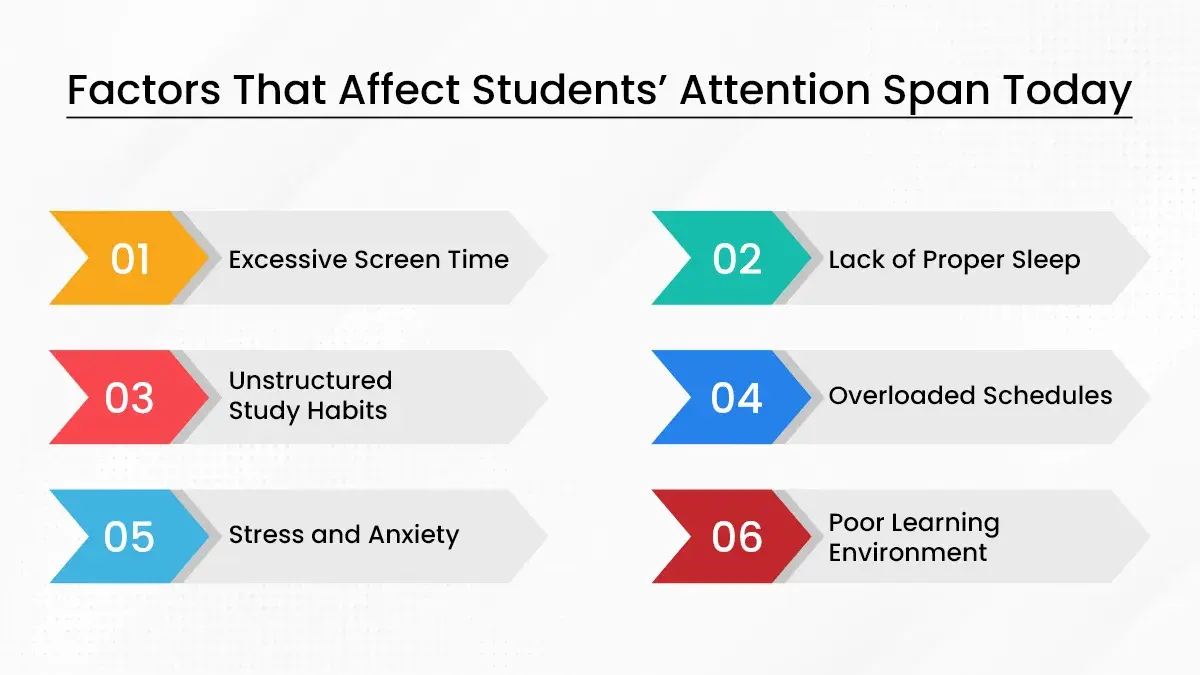
Factors That Affect Students’ Attention Span Today
In today’s digitally driven world, many factors affect a student’s ability to stay focused. Here are some factors that mostly affect students:
1. Excessive Screen Time
Excessive use of smartphones, tablets, and social media doom-scrolling reduces the ability to focus for long periods. Constant notifications and quick content consumption shorten attention spans.
2. Lack of Proper Sleep
Insufficient sleep or inadequate sleep affects brain function, memory, and concentration. Students who do not get enough rest often feel tired and find it difficult to stay attentive in class.
3. Unstructured Study Habits
Students with a shorter attention span usually lack concentration, leading to distractions and inefficient learning.
4. Overloaded Schedules
Too many academic and extracurricular activities can overwhelm students, leaving them mentally exhausted and unable to concentrate properly.
5. Stress and Anxiety
Academic pressure, competition, and expectations can create stress, which negatively impacts focus and attention.
6. Poor Learning Environment
Noisy surroundings, lack of proper study space, or constant interruptions can make it difficult for students to concentrate.
How to Improve a Student’s Attention Span?
Here are some ways through which a student can increase their attention span:
1. Create a Distraction-Free Study Environment
Choose a quiet and clean place to study. Keep your phone or tablet on silent or in another room, and avoid unnecessary interruptions to maintain full concentration on your task.
2. Follow the Pomodoro Technique
Start slow, use the Pomodoro technique, which includes focused intervals of 25–50 minutes, followed by a 5 to 10-minute break. This method helps the brain stay fresh and improves long-term focus.
3. Set Clear and Achievable Goals
Setting unachievable goals can lead to stress. Instead, set small achievable goals that help maintain direction and prevent loss of focus, leading to goal completion.
4. Limit Screen Time
Higher screen time and doom-scrolling reduce your attention span. Controlled screen time helps improve concentration and mental clarity.
5. Practice Mindfulness and Meditation
Simple breathing exercises, meditation, or yoga can calm the mind and increase focus. Even 10–15 minutes daily can make a noticeable difference.
6. Maintain a Healthy Routine
Proper sleep, a balanced diet, and regular physical activity are essential for brain function. A healthy body supports better attention and learning ability.
7. Take Regular Breaks
Avoid studying for long, continuous hours. Short breaks help refresh the mind and prevent mental fatigue, allowing you to return with better focus.
Role of Schools in Improving Attention Span
Schools are the second home of every student, and play an important role in increasing and maintaining the attention span of students. By creating structured and engaging learning spaces, schools can help students build the ability to concentrate for longer periods.
One of the best ways schools can support students' attention span is by using activity-based learning. Instead of relying only on traditional teaching methods, schools can use discussions, group activities, and hands-on projects to keep students engaged and interested in lessons.
Schools like Vivekanand Assandh also help by maintaining a balanced academic schedule. Proper time allocation for studies, breaks, sports, and creative activities prevents mental fatigue and keeps students refreshed. Short breaks between classes and varied learning methods help students maintain attention throughout the day.
By combining engaging teaching methods with a supportive and well-structured environment, schools play a vital role in helping students develop strong attention spans, leading to better learning outcomes and overall growth.
Conclusion: Why Attention Span Matters in Today’s Classrooms?
Attention span is an important factor that influences a student's life in today’s digital world. With increasing distractions and fast-paced content consumption, staying focused is no longer natural; it needs to be developed and nurtured. A strong attention span improves academic performance, builds confidence, discipline, and essential life skills.
By understanding the challenges that affect focus and taking the right steps to improve it, students can create a more productive and meaningful learning experience. Schools play a key role in this journey by providing structured environments, engaging teaching methods, and balanced routines that help students stay attentive and motivated.
At Vivekanand Assandh, we focus on developing strong concentration and learning habits in students through interactive teaching and a well-balanced academic approach. If you want your child to improve focus, build discipline, and achieve academic success, connect with Vivekanand Assandh today and give them the advantage of focused learning.
FAQs: The Role of Attention Span in a Student's Life
1. Why is attention span important for students?
Ans- Attention span helps students stay focused and learn more effectively, without getting distracted, leading to better academic performance.
2. How to improve students' attention span?
Ans- Here are some ways to improve a student’s attention span:
- Create a distraction-free study environment
- Follow the Pomodoro technique
- Set clear and achievable goals
- Limit screen time
- Practice mindfulness and meditation
- Maintain a healthy routine
- Take regular breaks
3. What destroys the attention span?
Ans- These are some factors that affect a student's attention span:
- Excessive screen time
- Lack of proper sleep
- Unstructured study habits
- Overloaded schedules
- Stress and Anxiety
- Poor learning environment
Get more information
