


MD: Learn about some summer vacation learning ideas that don’t feel like studying and help your child adapt productive habits. Tap to know now!
Introduction: Making Summer Learning Fun for Students
Summer is a very slow season. During this season, especially while on vacation, most children like to sleep, eat, and enjoy during this break. Parents understand that children surely deserve this break after the long academic year. But some parents worry that their children will forget the concepts they have learnt in class and will lose their touch for learning.
To fix that problem, in this blog, we will share some learning ideas for students who don’t feel like studying during their summer break. Let’s learn how they can enjoy vacations productively without losing touch with learning.
Learning Ideas that Don’t Feel Like Studying
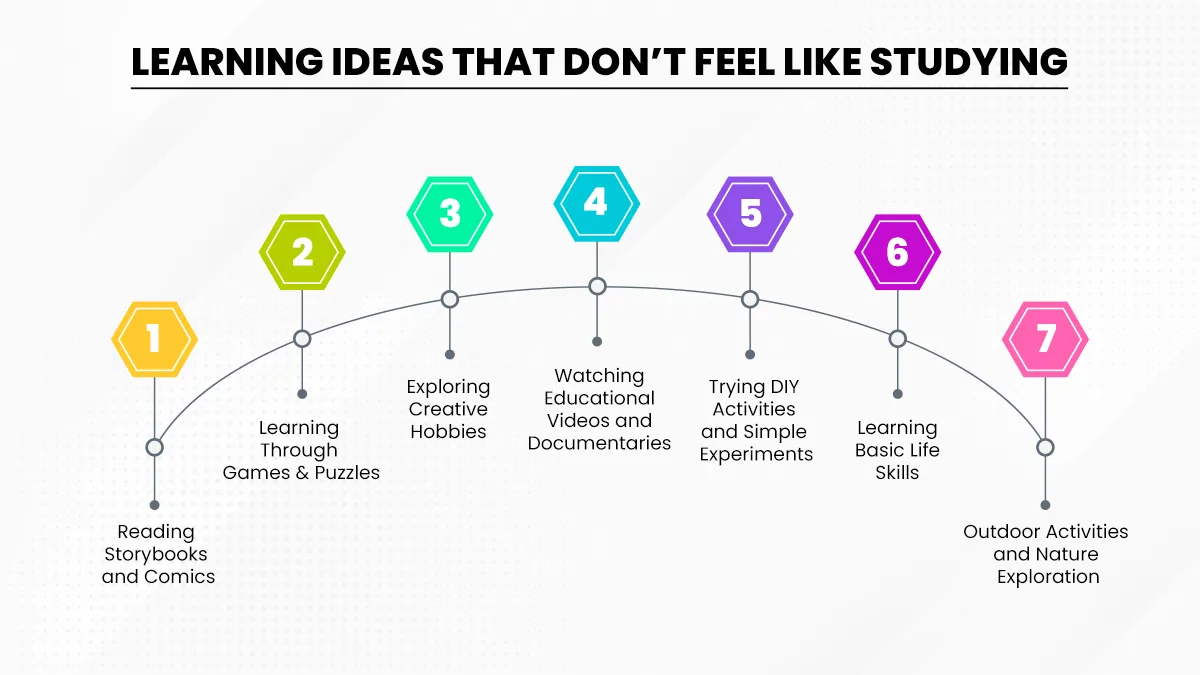
Here are some learning ideas for students who don’t feel like studying:
1. Reading Storybooks and Comics
Reading interesting storybooks or comics during the summer vacation helps with vocabulary learning, imagination, and concentration in an enjoyable way. It also increases students’ creativity as they explore new books.
2. Learning Through Games and Puzzles
Games like chess, Sudoku, quizzes, and puzzles make learning interactive and exciting. These activities improve critical thinking, memory, and problem-solving skills while keeping students mentally active.
3. Exploring Creative Hobbies
>Children are mostly free and have a lot to explore. Activities such as painting, music, dancing, photography, and crafting encourage creativity and self-expression. These hobbies help students discover their interests and build confidence.
4. Watching Educational Videos and Documentaries
Some students like knowing about history or how things work; for those kids, educational videos and documentaries make learning visual and engaging. Students can explore topics such as science, history, nature, or space in a fun, easy-to-understand way.
5. Trying DIY Activities and Simple Experiments
Hands-on activities like simple science experiments, gardening, or DIY projects help students learn practical concepts through experience, making learning more exciting and memorable.
6. Learning Basic Life Skills
Summer is also a good time to learn useful life skills such as communication, time management, cooking basics, and organizing daily routines. These small lessons help students become more independent and responsible.
7. Outdoor Activities and Nature Exploration
Exploring nature or engaging in outdoor activities like gardening, cycling, sports, or nature walks is one of the best things for a child, as it improves physical health and observational skills, which, in turn, indirectly improves mental health.
How Parents Can Make Summer Learning Enjoyable
Parents can support summer learning by encouraging children to explore activities they genuinely enjoy. Whether it is reading, painting, sports, music, or creative projects, allowing children to choose their interests keeps them motivated and engaged.
Parents should also avoid creating overly strict study schedules during vacations. Instead of focusing only on textbooks, they can introduce learning through games, outdoor activities, educational videos, puzzles, and practical experiences. This helps children learn new things without feeling pressured.
Most importantly, parents should create a balanced environment where children can relax, enjoy their holidays, and continue learning in meaningful ways. With encouragement, support, and freedom to explore, summer vacations can become both enjoyable and productive for students.
What Vivekanand Assandh Recommends for Meaningful Summer Learning?
At Vivekanand Assandh, we believe that students should get time to relax, explore, and grow beyond academics. Instead of forcing students to wake up early or study for many hours, we encourage parents to focus on meaningful learning experiences that help children develop productive habits naturally.
A healthy mix of outdoor play, skill-building activities, relaxation, and family time helps children stay mentally active and physically healthy. Limiting excessive screen time and promoting interactive learning experiences can greatly improve focus and overall development.
Most importantly, we advise parents to create a positive and supportive environment where children feel encouraged to try new things without fear of failure. At Vivekanand Assandh, we believe that meaningful summer learning is not about academic pressure; it is about helping students become confident, creative, and well-rounded individuals.
Conclusion: Learning Ideas that Don’t Feel Like Studying
Summer vacations are the fun times, making them feel like studying will only ruin a child’s summer vacation. But it is also important for students to learn something new, something productive at the same time. When learning is combined with creativity, fun activities, and practical experiences, children naturally develop productive habits without feeling academic pressure.
Simple activities like reading, outdoor play, creative hobbies, puzzles, and learning life skills can help students stay mentally active while also improving confidence, curiosity, and overall development, without making them feel bored. With the right balance of freedom, guidance, and encouragement, parents can turn summer vacations into a valuable period of growth for their children.
At Vivekanand Assandh, we believe that true learning goes beyond textbooks and classrooms. By encouraging creative exploration and holistic development, we help students become confident, curious, and well-rounded individuals. Connect with Vivekanand Assandh today to support your child’s joyful learning journey and meaningful growth this summer.
Get more information
